
V J Day 1945 The Surrender of Japan and the End of World War II
On August 14, 1945, radios across the United States carried the news people had waited nearly six years to hear: Japan had accepted Allied surrender terms. World War II was ending.
For millions, V-J Day meant church bells, street dancing, strangers embracing, and families daring to hope their loved ones would come home. For others, it brought quieter emotions: grief for the dead, fear about what came next, and relief so deep it was hard to name.
The day did not stand alone. It came after years of brutal fighting across the Pacific, the collapse of Nazi Germany, the atomic bombings of Hiroshima and Nagasaki, and the Soviet Union’s entry into the war against Japan. It marked the end of global conflict, but it also opened a new chapter in world history.

Why V-J Day mattered so much
V-J Day stands for Victory over Japan Day. In the United States, it is most often associated with August 14, 1945, when President Harry S. Truman announced that Japan had accepted the Allied terms of surrender. In Japan and many other countries, August 15 is remembered as the day Emperor Hirohito addressed the Japanese people by radio. The formal surrender documents were signed on September 2, 1945, aboard the USS Missouri in Tokyo Bay.
That difference in dates can confuse the story, but the meaning is clear. V-J Day 1945 ended World War II, the deadliest conflict in human history.
By that point, the war in Europe had already ended. Germany surrendered in May 1945, and Americans celebrated V-E Day, Victory in Europe Day. Yet the Pacific war continued with terrible force. Allied leaders expected that an invasion of the Japanese home islands could bring enormous casualties. Japanese cities had suffered heavy bombing. Soldiers and civilians across Asia were exhausted by years of occupation, displacement, hunger, and violence.
V-J Day signaled more than a battlefield victory. It meant:
The end of World War II as a global war
The beginning of Japan’s occupation and reconstruction
The return home of millions of service members
The release of many prisoners of war
A new balance of power led by the United States and the Soviet Union
The start of difficult debates about atomic weapons, empire, justice, and memory
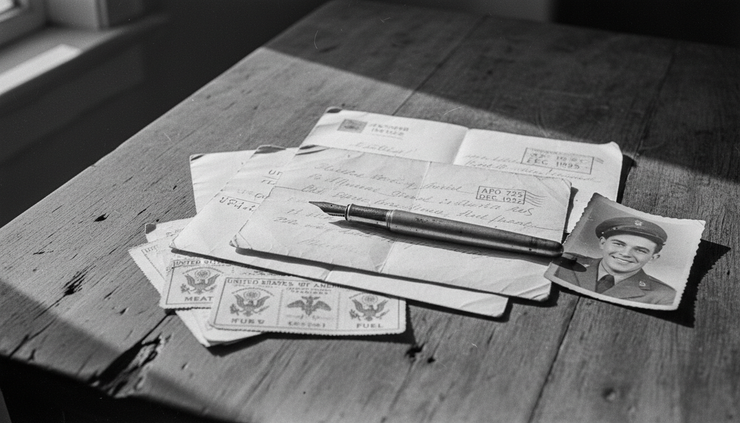
For families who had lived with telegrams, ration books, blackout curtains, and casualty lists, the news felt immediate and personal. History had shifted, but so had daily life.
The final months before Japan surrendered
Japan’s surrender came after a rapid series of events in the summer of 1945. Each one narrowed the choices facing Japan’s leaders.
Date | Event | Why it mattered |
May 8, 1945 | Germany surrendered to the Allies | Japan became the last Axis power still fighting |
July 26, 1945 | The Allies issued the Potsdam Declaration | The United States, Britain, and China demanded Japan’s unconditional surrender |
August 6, 1945 | The United States dropped an atomic bomb on Hiroshima | The attack destroyed much of the city and shocked Japan’s leaders |
August 8, 1945 | The Soviet Union declared war on Japan | Japan lost hope that Moscow might help negotiate peace |
August 9, 1945 | The United States dropped an atomic bomb on Nagasaki | A second atomic attack deepened the crisis inside Japan’s government |
August 14, 1945 | Japan accepted Allied surrender terms | Truman announced the news to the American public |
August 15, 1945 | Emperor Hirohito spoke by radio | Many Japanese people heard their emperor’s voice for the first time |
September 2, 1945 | Japan signed the surrender aboard the USS Missouri | World War II formally ended |
The atomic bombings remain among the most debated decisions in modern history. Supporters at the time argued that the bombs would force surrender and avoid an invasion. Critics have pointed to the massive civilian suffering and questioned whether Japan was already close to surrender. The Soviet declaration of war also played a major role, since Japan had hoped the Soviets might serve as mediators.
Inside Japan, the decision to surrender was not simple. Military leaders were divided. Some wanted to continue fighting, even after Hiroshima, Nagasaki, and the Soviet attack in Manchuria. Emperor Hirohito intervened and accepted the Allied terms, provided the imperial institution could continue under Allied authority. The Allies accepted a version of that condition, and Hirohito remained emperor, though stripped of political power after the war.

How the news reached the world
News of Japan’s surrender moved through radio broadcasts, newspaper extras, military channels, and word of mouth. In the United States, President Truman told reporters at the White House on August 14 that Japan had accepted the terms. Soon after, sirens, church bells, and car horns filled the night.
In New York City, Times Square became one of the most famous scenes of celebration. Photographs from that night showed crowded streets, sailors, service members, office workers, and civilians packed shoulder to shoulder. The well-known image of a sailor kissing a woman in Times Square has become a symbol of the moment, though today many also view it with concern because the woman did not consent. That tension reminds us that public memory often changes as people ask better questions of the past.
Washington, D.C., also erupted. Crowds gathered near the White House. Truman appeared outside and spoke briefly to the people there. For him, the victory carried personal weight. He had become president only months earlier after Franklin D. Roosevelt’s death and had faced some of the hardest decisions of the war.
Across the United States, celebrations took many forms:
People poured into downtown streets.
Churches held prayer services.
Workers left factories and shipyards.
Families placed flags in windows.
Bars and dance halls filled with strangers who suddenly felt like neighbors.
The joy was real, but it was not universal in the same way. Families who had lost sons, daughters, spouses, parents, and friends had no simple victory to celebrate. Many joined the crowds anyway. Others stayed home, holding photographs or waiting for official word about someone missing in action.
Reactions beyond the United States
V-J Day was a worldwide event because the war had touched nearly every continent.
In Britain, people celebrated in London after years of bombing, rationing, and loss. Crowds gathered in places such as Trafalgar Square and around Buckingham Palace. The relief was mixed with fatigue. Britain had survived the war, but it faced debt, shortages, and the strain of rebuilding.
In Australia and New Zealand, the surrender brought relief after years of fear that Japan might push farther south. Australian forces had fought in New Guinea, Borneo, and other parts of the Pacific. Families waited for prisoners of war to come home from camps where many had suffered starvation, disease, and forced labor.
In China, the end of the war marked victory after years of Japanese invasion and occupation that began before the global war fully widened. Cities such as Nanjing carried memories of mass violence. The end of Japanese occupation was a turning point, but it did not bring lasting peace. Civil war between Chinese Nationalists and Communists soon resumed.
In Korea, August 15 became Liberation Day. Japan’s colonial rule over Korea ended, but liberation quickly gave way to division. Soviet forces entered the north, and American forces accepted surrender in the south. That division would shape the Korean Peninsula for generations.
In the Philippines, where Manila had been devastated in 1945, the news carried special meaning. Filipinos had lived through invasion, occupation, guerrilla war, and fierce fighting during liberation. V-J Day meant the end of Japanese occupation, but it also left a country facing rebuilding, grief, and political change.
For Japanese civilians, the day felt very different. Many people heard Emperor Hirohito’s radio address on August 15 without fully understanding his formal language at first. The message was clear enough, though: the war was over, and Japan had lost. For civilians who had survived firebombing, hunger, displacement, and the atomic attacks, surrender brought shame, fear, relief, and uncertainty all at once.
Personal stories behind the headlines
The broad story of V-J Day can sound like a sequence of official announcements. The human story was messier and more powerful.
Many American veterans remembered the news as the moment their future changed. Service members training for a possible invasion of Japan understood that surrender might have saved their lives. Some later recalled that they sat in silence before cheering, as if they needed time to believe it.
Sailors aboard ships in the Pacific heard the news through loudspeakers or signal messages. Some celebrated on deck. Others thought of friends lost at Pearl Harbor, Midway, Guadalcanal, Iwo Jima, Okinawa, and countless smaller battles that never became household names.
Prisoners of war experienced V-J Day in an even more direct way. Allied POWs held by Japan had endured harsh conditions in camps across Asia. After surrender, many were malnourished and ill. Relief aircraft dropped food, medicine, and supplies while Allied teams worked to find and evacuate prisoners. Survivors later described the shock of seeing friendly planes overhead and realizing that captivity might soon end.
Civilians had their own stories. A mother in Ohio might have saved every letter from a son in the Navy. A child in California might have known the war through ration stamps and neighborhood scrap drives. A Japanese American family might have heard the news from inside or just after leaving an incarceration camp, where the U.S. government had confined people of Japanese ancestry despite no evidence of mass disloyalty. For them, victory over Japan did not erase the injustice they had faced at home.
In Hiroshima and Nagasaki, survivors known as hibakusha carried memories that were often hard to share. Some lost entire families. Others lived with burns, illness, grief, and stigma. Their accounts later became central to global conversations about nuclear weapons and civilian suffering in war.
The formal surrender aboard the USS Missouri
The celebrations of August 14 and 15 came before the official ceremony. That took place on September 2, 1945, aboard the American battleship USS Missouri in Tokyo Bay.
General Douglas MacArthur accepted the surrender on behalf of the Allied powers. Japanese representatives signed first, followed by representatives of the United States, China, Britain, the Soviet Union, Australia, Canada, France, the Netherlands, and New Zealand. The ceremony was brief, carefully staged, and heavy with symbolism.
The setting mattered. The USS Missouri represented American naval power, and Tokyo Bay placed the ceremony at the heart of defeated Japan. Allied aircraft flew overhead. Cameras captured the moment for newspapers and newsreels.
For the world, the signing provided the official end point that public celebrations had already claimed. World War II was over.
What V-J Day changed after the war
The surrender of Japan did not return the world to the way it had been in 1939. It created a new order.
Japan was occupied and rebuilt
After surrender, Allied occupation forces, led by the United States under MacArthur, began reshaping Japan’s government and society. Japan adopted a new constitution, expanded civil rights, reduced the political role of the emperor, and renounced war as a sovereign right under Article 9.
The occupation also brought land reform, changes in education, and steps toward rebuilding the economy. Japan’s postwar recovery did not happen overnight, but the surrender opened the path toward its later role as a major democratic and economic power.
Soldiers came home to changed societies
Millions of service members returned home. In the United States, the GI Bill helped many veterans attend college, buy homes, and enter civilian careers. At the same time, benefits did not reach all veterans equally. Black veterans and other veterans of color often faced discrimination in housing, education, and employment.
Women who had worked in factories, shipyards, offices, hospitals, and military support roles also faced pressure to leave wartime jobs. Many did, but the war had already changed expectations. The memory of women’s wartime work helped shape later movements for equal opportunity.
The nuclear age began
The atomic bombings made clear that humanity had entered a dangerous new era. The United States briefly held a nuclear monopoly, but the Soviet Union tested its own atomic bomb in 1949. Fear of nuclear war became a defining feature of the Cold War.
V-J Day ended one war while setting the stage for new anxieties. Civil defense drills, arms races, and debates over nuclear control all grew from the world created in 1945.
Empires weakened and independence movements grew
World War II damaged European colonial power. Across Asia, people who had lived under imperial rule demanded independence. India, Indonesia, Vietnam, the Philippines, and other nations followed different paths, some peaceful and some violent.
Japan’s defeat ended its empire, but the broader postwar period forced many imperial powers to confront the limits of their control.

Remembering V-J Day with honesty
V-J Day deserves to be remembered as a day of liberation, relief, and historic change. It ended a war that had killed tens of millions and scarred entire societies. It brought troops home, freed prisoners, and ended Japanese occupation across Asia.
It also deserves honest memory. The end of the war came through immense suffering. Hiroshima and Nagasaki were devastated. Japanese civilians faced hunger and ruin. Allied families grieved the dead. Former POWs and Holocaust survivors carried trauma. Colonized peoples wondered whether victory for the Allies would mean freedom for them too.
That is why V-J Day is more than an old photograph of cheering crowds. It is a reminder that peace is not just the absence of fighting. Peace requires rebuilding, justice, memory, and the hard work of imagining a different future.
The day Japan surrendered closed the deadliest war in history. It also left later generations with a responsibility: to remember the cost, listen to the people who lived through it, and treat victory not as an ending alone, but as a warning and a lesson.


Comments