
Reformation Day Explained History Martin Luther and Its Lasting Impact
Every year on October 31, while many people think of costumes and candy, churches across the world remember a very different kind of door-knocking. Reformation Day marks the moment in 1517 when Martin Luther, a German monk and professor, challenged practices in the medieval church and helped set off a movement that reshaped Christianity.
The day is not only about one man or one document. It is about Scripture, conscience, church authority, public debate, political power, education, worship, and the long struggle to reform religious life. Its effects still shape denominations, Bible reading, church music, ideas about vocation, and even modern views of religious freedom.

What Reformation Day remembers
Reformation Day is observed on October 31 because tradition says Martin Luther posted his Ninety-Five Theses on the door of the Castle Church in Wittenberg on that date in 1517. The theses were written in Latin and meant for academic debate. They criticized the sale of indulgences and questioned the church’s teaching on repentance, forgiveness, and spiritual authority.
Indulgences were connected to the church’s teaching on penance and the reduction of temporal punishment for sin. In practice, some preachers presented them in ways that sounded like spiritual benefits could be bought. Luther objected strongly. He believed forgiveness came through God’s grace, received by faith, rather than through financial transactions or human merit.
The posting of the theses has become a powerful symbol. Whether imagined as a dramatic public act or understood as a formal academic notice, it represents a turning point. A local theological dispute soon became a European crisis.
That happened partly because of timing. The printing press, developed in Europe in the 15th century, allowed Luther’s writings to spread quickly. Pamphlets, sermons, and translated works reached readers far beyond university walls. What might once have stayed local became a public conversation.
Reformation Day, then, remembers the start of a movement that asked hard questions:
What is the source of Christian authority?
How is a person made right with God?
Who should have access to Scripture?
What should worship look like?
Can the church reform itself when its practices drift from its teachings?
These questions did not produce simple answers. They led to renewal, conflict, division, and lasting change.
The world that made reform feel urgent
To understand the Reformation, it helps to picture western Europe in the early 1500s. The Roman Catholic Church was the dominant religious institution in the West. It shaped daily life from birth to death. It ran schools, influenced governments, sponsored art and architecture, and guided spiritual practice.
Many people were deeply devout. They attended Mass, prayed, went on pilgrimages, honored saints, and sought assurance of salvation. At the same time, criticism of church corruption had grown for centuries. Some clergy held multiple church offices. Some bishops lived more like princes than pastors. Many ordinary believers felt distant from the Bible, since Scripture and worship were often in Latin.
Calls for reform did not begin with Luther. Earlier voices included John Wycliffe in England and Jan Hus in Bohemia. Both criticized church abuses and stressed the authority of Scripture. Hus was executed in 1415, a century before Luther’s protest, but his followers kept reform hopes alive.
The Renaissance also played a role. Humanist scholars encouraged a return to original sources. They studied Greek and Hebrew texts and questioned old assumptions. Erasmus of Rotterdam, a major Catholic scholar, published a Greek New Testament in 1516. His work gave reformers better tools for studying Scripture.
Political conditions mattered too. The Holy Roman Empire was a patchwork of territories, cities, bishops, and princes. Local rulers often resented the power of Rome. Some supported reform for sincere religious reasons. Others saw a chance to gain independence or control church wealth.
The Reformation grew in this mix of piety, scholarship, frustration, and politics. It was not a single event. It was a series of arguments, sermons, translations, councils, alliances, and separations that unfolded over decades.

Martin Luther and the key figures who shaped the movement
Martin Luther stands at the center of Reformation Day because his protest became the spark. Born in 1483 in Eisleben, Germany, Luther entered an Augustinian monastery and later became a professor of biblical studies at the University of Wittenberg.
His study of Scripture, especially Romans and Galatians, convinced him that sinners are justified by grace through faith. This became one of the defining teachings of the Protestant Reformation. Luther did not begin by trying to start a new church. He wanted debate and reform. Yet his views soon brought him into conflict with church authorities.
In 1521, Luther appeared before the Diet of Worms, an imperial assembly. Asked to recant his writings, he refused unless convinced by Scripture and clear reason. He was declared an outlaw, but Frederick the Wise of Saxony protected him. During his time in hiding at Wartburg Castle, Luther translated the New Testament into German. That translation helped ordinary people read Scripture in their own language and shaped the German language itself.
Luther was not alone. The Reformation involved many figures, each with a distinct role.
Philipp Melanchthon
A brilliant scholar and Luther’s colleague in Wittenberg, Melanchthon helped organize Lutheran theology. He wrote the Augsburg Confession in 1530, one of the central statements of Lutheran belief.
Katharina von Bora
A former nun who married Luther, Katharina managed the Luther household, hosted students and guests, and became a visible example of Protestant views on marriage, family, and vocation. Her life reminds us that the Reformation affected homes as well as lecture halls.
Huldrych Zwingli
In Zurich, Zwingli led reform with a strong focus on Scripture and changes to worship. He agreed with Luther on many points but differed on the Lord’s Supper, showing that Protestant reformers did not always move in one direction.
John Calvin
Based in Geneva, Calvin developed a major branch of Reformed theology. His writings shaped churches in Switzerland, France, Scotland, the Netherlands, and beyond.
William Tyndale
In England, Tyndale translated much of the Bible into English. His work influenced later English Bibles, including the King James Version. He paid for his efforts with his life.
Catholic reformers also played a major role. The Council of Trent, held between 1545 and 1563, clarified Catholic doctrine and addressed abuses. New and renewed religious orders, including the Jesuits, strengthened Catholic education, missions, and spiritual discipline. The result was not only a Protestant Reformation, but also a serious Catholic renewal.

How the Reformation changed Christianity
The Reformation changed Christianity in ways that still matter. Some changes were theological. Others were cultural, educational, and political.
One major shift was the emphasis on Scripture as the chief authority for Christian teaching. Protestant reformers argued that church traditions should be tested by the Bible. This encouraged translation of Scripture into common languages and placed new value on literacy.
Another major teaching was justification by faith. Reformers taught that salvation rests on God’s grace, not on human works or church rituals. Good works still mattered, but as the fruit of faith rather than the basis of acceptance before God.
Worship changed too. Many Protestant churches placed preaching at the center of the service. Congregational singing became more common. Luther himself wrote hymns, including “A Mighty Fortress Is Our God,” which became closely associated with Reformation themes.
The Reformation also changed views of ordinary life. Luther taught that daily work could be a calling from God. Farming, parenting, teaching, governing, and crafting all had spiritual value when done in faith and service. This broadened the idea of vocation beyond monks, nuns, and priests.
At the same time, the Reformation brought painful division. Western Christianity fractured into Catholic, Lutheran, Reformed, Anglican, Anabaptist, and other traditions. Religious conflict followed, including wars and persecution. Both Protestant and Catholic authorities at times used state power to suppress dissent.
That history calls for honesty. Reformation Day can inspire gratitude for renewal, but it should not become triumphalism. It remembers a movement that recovered vital truths for many Christians, yet also opened wounds that took generations to address.
Modern ecumenical conversations have helped soften old hostilities. Catholics and Protestants still disagree on important doctrines, but many now speak with more respect than in past centuries. Shared Bible study, service to the poor, and joint statements on areas of agreement show how memory can lead to humility.
How Reformation Day is observed today and why it still matters
Today, Reformation Day is especially important in Lutheran and Reformed churches. Many congregations observe it on October 31 or on the nearest Sunday. Churches may hold special worship services, sing Reformation hymns, read Scripture passages linked to grace and faith, and preach on renewal in the church.
In some places, worshipers wear red, a color often associated with the Holy Spirit and the church. Children may learn about Martin Luther, the printing press, Bible translation, or the meaning of the Ninety-Five Theses. Some churches host lectures, concerts, community meals, or historical reenactments.
In parts of Germany and other European regions, Reformation Day is a public holiday. In the United States, it is mostly a church observance, though many Protestant schools and congregations mark it in special ways.
Its timing on October 31 creates an interesting contrast. While Halloween focuses on costumes, fear, and festivity, Reformation Day focuses on faith, conscience, and reform. Some churches offer Reformation events as an alternative to Halloween activities. Others simply recognize that both days occupy the same date and speak to different parts of cultural life.
The modern relevance of Reformation Day goes beyond church history. It raises questions that still feel current.
Access to truth
The reformers cared deeply about who could read, understand, and discuss Scripture. Today, access to religious education and reliable information remains a major issue.
Conscience and courage
Luther’s stand at Worms has become a symbol of conscience under pressure. Modern society still wrestles with when to resist authority and how to do so responsibly.
Institutional reform
The Reformation shows that institutions can drift, resist correction, and still need renewal. Churches, schools, governments, and communities all face this challenge.
Faith in ordinary life
The Reformation’s teaching on vocation continues to speak to people who wonder whether daily work has meaning. It says service does not need a pulpit to matter.
Unity without forgetting truth
The history of the Reformation reminds Christians that conviction and charity must live together. Strong beliefs do not excuse cruelty. Respect does not require pretending differences do not exist.
For many believers, Reformation Day is a call to return to the heart of the Christian message: grace, faith, Scripture, and Christ. For students of history, it is a window into how ideas can change societies. For anyone interested in religion’s role in public life, it shows how theology, technology, politics, and culture can collide.
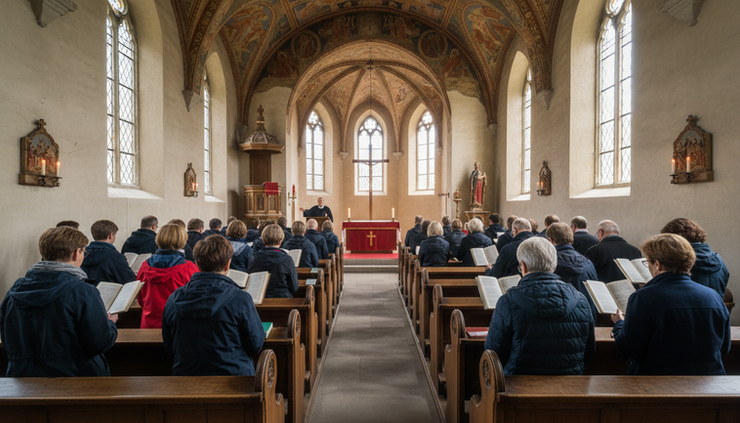
Reformation Day Explained History Martin Luther and Its Lasting Impact is more than a summary of a date on the church calendar. It points to one of the defining turns in religious history. A debate over indulgences became a movement about grace, authority, worship, education, and the life of the church.
The best way to remember Reformation Day is not only to look back at 1517. It is to ask what reform still means. Where does faith need clarity? Where do institutions need honesty? Where can conviction be joined with humility?
Reformation Day endures because those questions never really disappear. History gave them a date. Each generation must decide how to answer them.


Comments