
Purple Hearts and Gold Star Mothers Honoring Sacrifice, History, and Minnesota Stories
A small purple medal and a gold star in a window can carry more history than a monument. One marks a service member wounded or killed in action. The other marks a family whose life changed forever because someone they loved died while serving the United States.
The Purple Heart and Gold Star Mothers belong to different parts of military tradition, but they often meet in the same place: grief, pride, remembrance, and public duty. One is pinned to a uniform or preserved in a case. The other is lived each day by a mother who speaks a name the country must not forget.
This post looks at the history and meaning of the Purple Heart, the role Gold Star Mothers play in honoring fallen service members, and what can responsibly be said about Gold Star Mothers in Minnesota. It also includes personal, anonymized story sketches to reflect the emotional weight behind the symbols without exposing private family details.
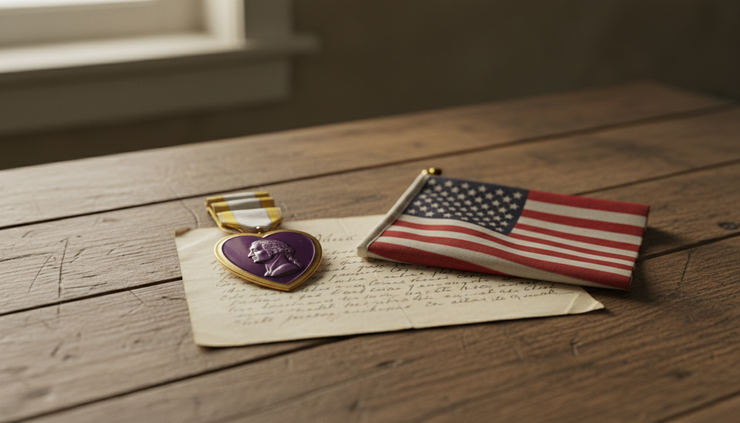
The Purple Heart began as a badge of merit
The Purple Heart is one of the most recognized U.S. military decorations, but its roots go back further than many people realize.
In 1782, during the Revolutionary War, General George Washington created the Badge of Military Merit. It was a heart-shaped piece of purple cloth, and it was awarded to soldiers for unusual bravery, fidelity, and service. At the time, many military honors were reserved for officers. Washington’s badge stood apart because enlisted soldiers could receive it.
The original badge fell out of regular use after the Revolutionary War. It returned in a new form in 1932, on the 200th anniversary of Washington’s birth. That revived decoration became the Purple Heart Medal.
Over time, the meaning of the medal changed. Today, the Purple Heart is awarded to U.S. service members who are wounded or killed as a result of enemy action. It is not “won” in the way some awards are won through a competitive process. It is received through sacrifice.
That distinction matters.
Many recipients will gently correct people who say someone “won” a Purple Heart. A service member earns it through wounds that often leave lasting physical pain, invisible trauma, or permanent absence. For families of the fallen, the medal may be presented after death. It may sit near a photograph, dog tags, folded flag, or handwritten note from the person who never came home.
The Purple Heart also carries a rare kind of equality. It can be awarded to a private or a general, a young recruit or a career service member, someone from a large city or a rural town. The medal does not measure rank. It marks harm suffered in service.
That is part of why the Purple Heart remains so powerful. It is both personal and national. It belongs to one service member, but it asks a country to remember the cost behind a uniform.
What the Purple Heart means to families
For a wounded veteran, the Purple Heart can be complicated. Some display it with pride. Others keep it tucked away. For some, it brings painful memories. For others, it confirms that what happened to them was real and formally recognized.
For families of those killed in action, the medal may become one of the few physical objects connected to a final chapter they never wanted.
A mother might hold the medal and remember a child before the uniform: muddy shoes by the door, a favorite meal, a high school graduation, a last phone call. A father might study the details of the award citation. A spouse might keep it in a shadow box near a wedding photo. A sibling might bring it to a school presentation decades later, not for attention, but to say, “This person lived.”
That is why ceremonies involving the Purple Heart can feel both public and deeply private. The audience sees a medal. The family sees a life.
A composite story, drawn from common accounts shared by military families, shows the tension:
A Minnesota mother keeps her son’s Purple Heart in a glass case, but she does not open it often. On Memorial Day, she places his photo beside it and tells her grandchildren one story about him that has nothing to do with war. She wants them to know he served, but she also wants them to know he laughed loudly, hated peas, and called home every Sunday when he could.
Stories like this are not rare. They remind us that military honors do not replace mourning. They give mourning a public language.

Gold Star Mothers carry remembrance forward
The Gold Star tradition dates to World War I, when families displayed service flags in their windows. A blue star marked a family member serving in the military. A gold star showed that the service member had died while serving.
Over time, the gold star became a national symbol of loss in military service. The term Gold Star Mother refers to a mother whose son or daughter died while serving in the U.S. Armed Forces.
American Gold Star Mothers, Inc. was founded in 1928 by Grace Darling Seibold, whose son, First Lieutenant George Vaughn Seibold, died while serving in World War I. The organization gave grieving mothers a way to find one another, support military families, care for veterans, and keep the memory of fallen service members alive.
Gold Star Mothers do not all grieve the same way. Some speak at public ceremonies. Some visit schools. Some place wreaths. Some volunteer at veterans homes. Some stay private. Some do all of these things at different seasons of life.
Their role is not ceremonial only. Gold Star Mothers often become keepers of names, dates, photos, letters, and stories. They correct the record when memory grows vague. They remind communities that a casualty number was a person with a birthday, a hometown, and a family.
Gold Star Mother’s Day, observed on the last Sunday in September, offers one formal moment of national recognition. Memorial Day, Veterans Day, Purple Heart Day on August 7, and local remembrance events also bring Gold Star families into public view.
Still, the work of remembrance does not fit neatly on a calendar. It happens in small moments:
Speaking a fallen service member’s name at a city ceremony
Donating time to veterans organizations
Comforting a newly bereaved military family
Preserving uniforms, medals, and letters
Teaching younger generations what service and sacrifice have meant in one family
A second composite story reflects what many Gold Star families describe:
At a county courthouse ceremony, a mother stands when her daughter’s name is read. She does not speak at first. Later, she tells a teenager who approached her, “Say her name. That helps.” The teenager repeats it carefully. For the mother, that moment matters as much as the speech, the wreath, or the bugle call.
Gold Star Mothers show how private grief can become public service without becoming less personal.
What we know about Gold Star Mothers in Minnesota
Minnesota has a long military history, from Civil War regiments to National Guard service, active-duty members, reservists, and veterans from every major U.S. conflict. The state observes Memorial Day events in large cities and small towns, and many communities maintain veterans memorials that include the names of those who died in service.
When discussing how many Gold Star Mothers reside in Minnesota, accuracy requires care.
There is no single public, comprehensive, regularly updated registry that lists every Gold Star Mother living in Minnesota. Gold Star status is tied to family loss, but not every eligible mother joins an organization, attends public events, or appears in state-level data. Privacy also matters. Many families choose not to be publicly identified.
Because of that, a precise statewide count should not be stated unless it comes from a current official source, such as a state veterans agency, a recognized Gold Star family organization, or another verified public record.
What can be said responsibly is this:
Minnesota Gold Star Mothers data point | What it means |
Public statewide count | No definitive public count is consistently available |
Organization membership | Membership does not equal the total number of Gold Star Mothers |
Community presence | Gold Star Mothers are represented across Minnesota through ceremonies, family networks, and veterans events |
Best source for current numbers | Minnesota veterans agencies or recognized Gold Star family organizations |
That lack of a single statistic does not mean the number is small or the presence is limited. It means the public record does not fully capture private grief.
A more honest way to understand Minnesota’s Gold Star Mothers is to look at how remembrance appears across the state. In the Twin Cities, families gather at large public events. In northern Minnesota, names may be read at a local memorial near a lake or courthouse lawn. In farm communities, a framed photo may hang in a Legion hall. In suburbs, a mother may attend a school assembly so students can hear about a service member who once sat in classrooms like theirs.
For readers seeking an exact current count, the most reliable path is to contact the Minnesota Department of Veterans Affairs or an official Gold Star family organization active in the state. Any article, speech, or public program using a number should name the source and date, because counts change and membership records do not include everyone.
That transparency is part of respect. Gold Star Mothers should not be reduced to a number, and they should not be represented by a guessed one.
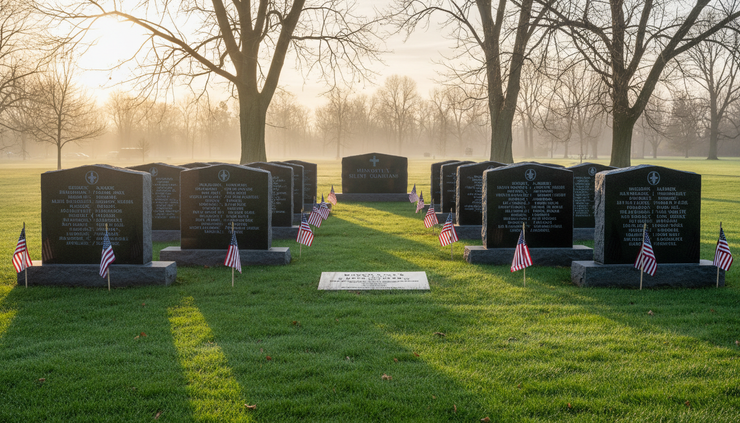
Minnesota stories live in names, places, and rituals
Minnesota remembrance often has a local texture. A name on a memorial may also be the name of a classmate, neighbor, teammate, or relative. A fallen service member may be remembered at a hockey rink, a church basement breakfast, a VFW hall, a county fair ceremony, or a school gym.
That closeness shapes the way Purple Hearts and Gold Star families are understood.
In a large national ceremony, the language can sound formal. In a small Minnesota town, remembrance may sound like someone saying, “I knew his mother,” or “She used to ride the bus with my daughter.” Both forms matter. The national language gives the sacrifice public honor. The local memory keeps the person human.
A third composite story reflects a common experience at community memorials:
A Gold Star Mother from greater Minnesota attends the same Memorial Day service every year. The first year, people did not know what to say, so many said little. Years later, they still come up to her after the ceremony. One brings flowers. One shares a memory of her son from high school. One simply says, “We remember.” She says those words do not remove grief, but they make it less lonely.
The Purple Heart can also enter these Minnesota stories in quiet ways. A wounded veteran may avoid attention, but show the medal to a child who asks about service. A family may bring a posthumous Purple Heart to a classroom so students understand that history is not only in textbooks. A county museum may preserve medals, letters, and uniforms so future generations know the local cost of national decisions.
These acts are small, but they are not minor. They are how memory survives after headlines fade.
How communities can honor without intruding
Respectful remembrance takes thought. Many people want to support Purple Heart recipients and Gold Star Mothers, but fear saying the wrong thing. Silence can feel safe, yet it may leave families feeling forgotten.
A few simple practices help.
Use the fallen service member’s name.
For many Gold Star families, hearing the name matters. It confirms that the person’s life is remembered, not only the death.
Avoid asking for painful details.
Let families decide what they want to share. Questions about how someone died can reopen wounds, especially in public settings.
Recognize that grief changes but does not end.
Anniversaries, birthdays, holidays, and military observances can remain difficult for decades.
Support local acts of remembrance.
Attend Memorial Day events. Visit veterans memorials. Read the names. Bring children when appropriate, and explain why the moment is solemn.
Do not treat medals as props.
A Purple Heart is not a decoration in the casual sense. It represents injury, death, and service. Handle it, photograph it, or display it only with permission and care.
Listen more than you speak.
A Gold Star Mother may want to tell a story about a child’s humor, kindness, stubbornness, or dreams. Those stories are part of remembrance too.

Why these symbols still matter
The Purple Heart and the Gold Star are simple symbols, but they ask hard things of the country.
They ask people to remember that military service can leave wounds seen and unseen. They ask communities to support families long after formal ceremonies end. They ask schools, towns, veterans groups, and neighbors to keep names alive. They also ask for accuracy, especially when talking about living families and state-level numbers.
For Minnesota, the story is both statewide and deeply local. Gold Star Mothers live not as statistics alone, but as parents, neighbors, volunteers, advocates, and witnesses. Some stand before crowds. Some grieve quietly. Some preserve medals and letters in a drawer. Some turn loss into public service. All deserve respect.
The Purple Heart tells us that sacrifice happened. Gold Star Mothers remind us who carries that sacrifice forward.
A meaningful next step is simple: attend a local remembrance event, visit a Minnesota veterans memorial, or ask a Gold Star family organization how to support its work. Then speak the names with care. Memory lasts longer when a community agrees to carry it together.



Comments