
First Settlers of Custer Township Lyon County MN Their Stories Challenges and Community Legacy
Before Custer Township had graded roads, farm groves, school districts, and section-line fences, it was open prairie. The first Euro-American settlers who came to this part of Lyon County, Minnesota, entered a place that could look generous and unforgiving on the same day. The soil promised a future. The wind, grasshoppers, blizzards, and distance from supplies tested every plan.
Their story is more than a list of names in old land records. It is a story of migration, risk, loss, persistence, and community building. It also begins with an honest reminder: this land was part of the homeland of Dakota people long before townships were surveyed or homestead claims were filed. The settlement period that shaped Custer Township followed treaties, conflict, forced removal, and rapid change across southwestern Minnesota.
The First Settlers of Custer Township Lyon County MN Their Stories Challenges and Community Legacy are best understood in that larger setting. They were farmers, immigrants, Civil War-era migrants, craftspeople, parents, and neighbors. They came looking for land, but they stayed only by learning to depend on one another.
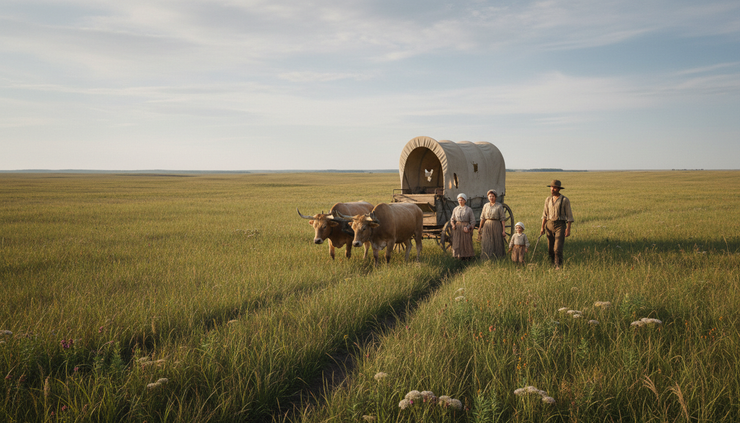
Custer Township before permanent settlement
Custer Township lies in Lyon County in southwestern Minnesota, a region shaped by prairie, glacial soils, wetlands, and long sightlines. Before Euro-American settlement, Dakota communities knew this broader region through seasonal movement, hunting, trade, and relationships with waterways and prairie resources.
The arrival of settlers in the 1870s and early 1880s did not happen in isolation. Several forces pushed and pulled people toward Lyon County:
The federal survey system divided land into townships and sections.
The Homestead Act and other land laws made farm claims possible for people with limited cash.
Railroads moved westward and made distant farm country seem more reachable.
Land agents promoted southwestern Minnesota as a place of rich soil and new opportunity.
Families already settled in nearby counties wrote letters encouraging relatives to follow.
Custer Township’s early settlers entered a region still forming its civic identity. Lyon County itself was organized after Minnesota had become a state, and many townships in the county developed during the post-Civil War farm settlement boom. Local government, roads, schools, and churches came after the first claims, not before them.
That meant the settlers did not move into a ready-made town. They moved into a surveyed prairie and had to build the rest.
Who the first settlers were and where they came from
The early settlers of Custer Township came from mixed backgrounds. Some were American-born families moving west from older farm states such as Wisconsin, Iowa, Illinois, or New York. Others were immigrants or children of immigrants from northern and central Europe. In this part of Minnesota, many early rural communities included people of Norwegian, Swedish, Danish, German, Irish, and other European backgrounds.
Their reasons for leaving home varied, but several patterns appear again and again in prairie settlement history.
They wanted land of their own
Land ownership was the strongest draw. In older states, good farmland could be expensive or already divided among previous generations. A young family might rent for years without much hope of buying. A farm worker might save wages but never reach the price of land back east.
Southwestern Minnesota offered a different promise. A person willing to live on and improve a claim could gain a farm. That promise was powerful, especially for immigrants who had left countries where land was scarce or social class limited opportunity.
Land did not mean instant comfort. A claim had to be broken, fenced, planted, and defended against weather. Still, ownership gave settlers a stake in the future.
They followed family and neighbors
Prairie settlement often moved through kinship chains. One family arrived, wrote home, and described the soil. A brother, cousin, former neighbor, or church acquaintance followed. This pattern helped create rural communities with shared languages, customs, and religious life.
That did not make settlement easy, but it reduced isolation. A newcomer might find someone nearby who could lend a team, share seed, help raise a wall, or translate at the county seat.
They were used to hard work but not always to prairie life
Many settlers had farming experience, yet prairie farming required new habits. In wooded regions, a farmer cleared trees. In Custer Township, the challenge was the opposite. There was little timber for houses, fences, and fuel. Settlers had to use what the prairie offered, buy lumber when they could, and plant trees for the next generation.
Breaking sod was slow, heavy work. The root systems of prairie grasses were dense and deep. A plow could turn the land, but the first crops often struggled. It took time to make a productive farm out of raw prairie.

Why Custer Township appealed to settlers
The settlers who chose Custer Township were not chasing ease. They were weighing hardship against possibility. Several features made the township and surrounding Lyon County attractive.
The first was soil. Prairie land in southwestern Minnesota could produce grains and later support diversified farms. Early settlers commonly planted wheat, oats, corn, potatoes, and garden crops. Wheat played a major role in early Minnesota agriculture because it could be marketed for cash.
The second was space. A farm family could think in acres rather than garden plots. They could plan for children, livestock, orchards, groves, and future buildings.
The third was access to markets, which improved as railroads spread through the region. Even when rails did not run through a settler’s front yard, nearby market towns changed farm life. Grain, lumber, machinery, and mail moved more reliably once railroad connections reached the county.
The fourth was community formation. Settlers knew that if enough families arrived, schools, churches, stores, blacksmith shops, and township government would follow. A lone claim could become part of a neighborhood within a few years.
That hope mattered. The prairie was not just land. It was a place where public life had to be invented.
The challenges they faced on the prairie
The first settlers in Custer Township faced hardships that could break families financially, physically, and emotionally. Some struggles were expected. Others arrived without warning.
Shelter had to come first
A family needed shelter before it could worry about comfort. Some settlers built simple frame houses if they had access to lumber and money. Others lived first in claim shanties, dugouts, or sod structures. These early homes were often small, drafty, dark, and crowded.
A stove, a bed, a trunk, and a table might fill much of the living space. Privacy was rare. Winter cold entered through every gap. Summer insects seemed to find every opening.
Yet these shelters marked the beginning of ownership. A rough claim shanty said, “We are staying.”
Weather could undo months of work
Southwestern Minnesota weather demanded respect. Settlers faced bitter winters, spring mud, summer heat, drought, hail, and sudden storms. A blizzard could trap animals and people. A prairie fire could sweep across dry grass faster than a person could run. Hail could flatten a crop before harvest.
The severe winters of the late 19th century left strong memories across Minnesota prairie communities. Even when a year brought a good crop, settlers knew one storm could threaten food, fuel, and livestock.
Grasshoppers brought fear and hunger
The grasshopper plagues of the 1870s struck many parts of Minnesota and the Great Plains. Rocky Mountain locusts could descend in huge numbers and strip fields, gardens, and even household items made of natural material. For settlers depending on one cash crop, the damage was devastating.
Families that had counted on wheat income suddenly had no crop to sell. Some needed aid, borrowed money, or left their claims. Others replanted and tried again. The grasshopper years became one of the defining trials of early prairie settlement.
Isolation shaped daily life
Distance made every task larger. A trip for flour, mail, lumber, or medical help could take hours or longer, depending on roads and weather. Early roads were often little more than trails. Mud, snow, and swollen streams could stop travel.
Isolation weighed heavily on women, children, elderly family members, and anyone ill or injured. A childbirth, broken bone, or fever became more dangerous when help was far away.
Neighbors reduced that risk. They shared tools, watched for smoke from prairie fires, helped during storms, and gathered for worship, funerals, school meetings, and harvest work.

How settlers built a community
The great achievement of Custer Township’s first settlers was not only that they survived. It was that they created institutions that outlasted them.
They organized local government
Township government mattered on the frontier. It gave residents a practical way to handle roads, taxes, local elections, poor relief, and public decisions. Once enough settlers lived in an area, township meetings became central events.
These meetings were not abstract politics. They decided which roads would be opened, which bridges or culverts were needed, and how limited money should be spent. Local officeholders were usually neighbors, not distant figures.
They founded schools
Schools often became one of the first shared projects. A rural schoolhouse gave children basic education, but it also served as a meeting place, polling place, and social center. Families who had little cash still supported schooling because it represented permanence.
A school said the community expected a next generation.
Teachers in early rural schools handled a wide range of ages in one room. Students walked or rode long distances. Lessons paused for farm work, weather, and family needs. Even so, these schools became some of the most important institutions in township life.
They formed churches and mutual aid networks
Faith communities helped settlers preserve language, custom, and identity. Churches offered worship, but they also gave people a calendar of gatherings and a sense of shared duty. Baptisms, weddings, funerals, holiday services, and church suppers connected scattered farms.
Mutual aid was just as important outside formal church walls. Neighbors helped raise barns, thresh grain, dig graves, fight fires, and care for families in crisis. The early community depended on the belief that today’s helper might need help tomorrow.
They changed the land
The settlers transformed the prairie. They broke native sod, planted crops, dug wells, built barns, fenced fields, and planted shelterbelts. Those changes supported farms and families, but they also altered ecosystems that had existed for generations.
A fair history holds both truths. Settlers built a community through intense labor, and that community came at the cost of major environmental and Indigenous displacement. Remembering Custer Township honestly means seeing achievement and loss together.
Notable moments from the settlement era
Exact dates and names can vary across county histories, land records, township minutes, and family accounts. Still, the broad pattern of Custer Township’s settlement period fits the wider history of Lyon County and southwestern Minnesota.
Period | What was happening | Why it mattered |
Before township settlement | Dakota people lived in and traveled through the broader region | The land had a long human history before survey lines and claims |
Late 1860s to 1870s | Land surveys, county organization, and farm claims expanded | Settlers began turning prairie into farms and neighborhoods |
1870s | Grasshopper plagues damaged crops across Minnesota prairie regions | Many farm families faced hunger, debt, and the threat of leaving |
Late 1870s to 1880s | Township institutions, schools, roads, and churches grew | Custer Township shifted from scattered claims to organized community life |
Late 19th century | Rail access and market towns strengthened the farm economy | Farmers could sell grain, buy supplies, and stay connected to the wider region |
These events were not separate from daily life. A rail line meant the price of wheat mattered. A township road meant getting a child to school. A grasshopper swarm meant a family might lose its only cash crop. A church meeting meant news, comfort, and help.
The legacy they left behind
Custer Township’s first settlers left a legacy that can still be read in the shape of rural life. Section-line roads, farm groves, cemeteries, school memories, church records, and family names all carry traces of the settlement era.
Their contributions were practical:
They turned claims into working farms.
They created township government where none had existed.
They supported schools for children in a remote area.
They built roads, bridges, churches, cemeteries, and gathering places.
They formed neighbor networks that helped families survive crisis.
Their legacy was also cultural. Immigrant languages, foodways, worship traditions, work habits, and family stories became part of local identity. Some of those traditions faded as generations changed. Others remained in surnames, holiday customs, church histories, and cemetery inscriptions.
For local residents and history enthusiasts, the most meaningful records may be the quietest ones. A land patent, a church register, an old plat map, a school souvenir booklet, or a weathered gravestone can open a window into lives that rarely made headlines.

How to keep their stories alive
The first settlers of Custer Township did not leave one single story. They left fragments. Some are in public records. Some remain in family albums and oral histories. Some are visible in the land itself.
Anyone researching this history can start with a few strong sources:
Lyon County land and property records
Township meeting minutes, when available
Federal and state census records
Church baptism, marriage, and burial registers
Cemetery records and gravestone inscriptions
County plat maps and atlases
Local newspapers on microfilm or in digital archives
Family letters, diaries, photographs, and farm documents
The best local histories come from comparing these sources. A name on a plat map tells where a person lived. A census record tells who lived in the household. A church record may reveal language, faith, and family ties. A newspaper notice might show a barn fire, school program, land sale, or funeral.
Together, these small records restore texture to the past.
Custer Township’s early settlers faced a prairie that demanded endurance. They came for land, but they built more than farms. They built roads to one another, schools for their children, churches for comfort, and local government for shared decisions. Their lives remind us that community is rarely sudden. It grows from repeated acts of work, care, and commitment, season after season.


Comments