
Early Settlers of Monroe Township Lyon County Minnesota and the Families That Shaped It
The history of Monroe Township is still spoken through its surnames. Some appear on old land records, cemetery stones, church rolls, school memories, and farm stories. Others live on because descendants, neighbors, and local historians kept repeating them until they became part of the township’s shared memory.
Among those early Monroe Township families were Louis and Ole Railson, J.L. Craig, E.L. Starr, Edward Glynn, Ole Helgelson, Ole Anderson, Andrew Christensen, David Morgan, J.M. Wardell, and Levi Montgomery. Their names point to a larger story: the making of a rural community in Lyon County, Minnesota, where farms, roads, schools, churches, and neighborly ties mattered as much as any official map.
This is not a complete roster of every early resident. It is a careful local sketch of several names still familiar in the township and town, and of the kind of work it took to turn prairie settlement into a lasting community.
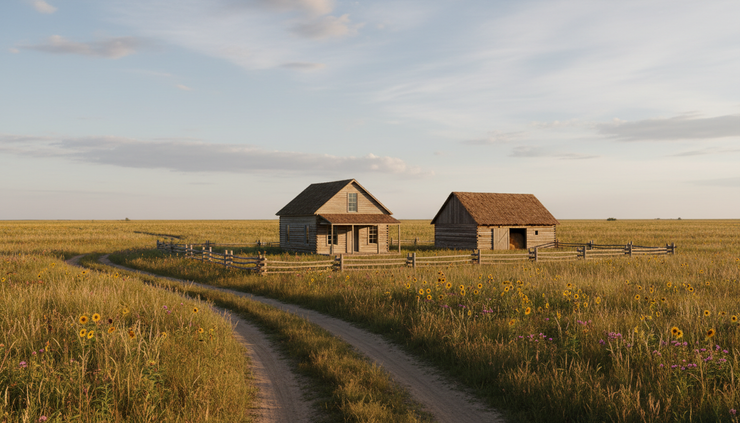
Monroe Township grew from land, work, and family names
Monroe Township sits within the broader story of Lyon County, an area shaped by agriculture, migration, and community building. Like many townships in southwestern Minnesota, it developed through a mix of land-taking, farm-making, and neighbor-to-neighbor cooperation.
Early settlers arrived with different backgrounds, skills, and expectations. Some likely came from other parts of the United States. Others carried Scandinavian names that reflect the migration patterns common across Minnesota. What united them was practical need. A family needed shelter before comfort. A field needed breaking before it could produce. Roads, schools, churches, and local government followed only after enough people stayed.
Township life asked much of its residents. A farm was not just a home. It was a workplace, a family enterprise, and often a long-term bet on the land. Early families had to think about:
securing and improving land
building houses, barns, wells, and fences
planting crops suited to the region
keeping livestock alive through Minnesota winters
helping neighbors during illness, storms, fires, and harvests
supporting schools, churches, and township decisions
That everyday work does not always leave dramatic records. A name may appear only briefly in a plat map, tax list, deed, school register, or obituary. Still, those small traces matter. They show who stayed long enough to be remembered.
The Railson name and the pull of family settlement
Louis and Ole Railson stand out because they appear together in local memory. Paired names often suggest more than two individuals. They point to a family line, a shared household, related farms, or a pattern of relatives settling near one another.
That mattered in a township. A new settler who arrived with relatives had a better chance of enduring the first hard years. Family members could share tools, labor, seed, livestock, meals, and news from elsewhere. They could help build a barn, care for children, or take in a household after a loss.
The Railson name also reflects the Scandinavian presence that became part of Minnesota’s rural identity. In many communities, Norwegian, Swedish, Danish, and other immigrant families created networks through language, faith, marriage, and farming. Without claiming a specific origin for the Railsons without records in hand, the name fits the wider pattern of families who made southwestern Minnesota home in the nineteenth and early twentieth centuries.
Spellings in historic records can vary. A first name such as Louis might appear differently in family notes, handwritten records, or local histories. That is common for early township research. Clerks wrote what they heard. Families later standardized names in different ways. For that reason, researchers often check several spellings when tracing a family.
Craig, Starr, Glynn, and the civic side of settlement
Names such as J.L. Craig, E.L. Starr, and Edward Glynn suggest another part of township life: public presence. Initials were common in older records and newspaper mentions. They often appear in land documents, meeting notes, business references, and formal notices.
A township needed people willing to take on civic tasks. Someone had to serve as a supervisor, clerk, road overseer, school officer, election judge, or organizer for local efforts. Not every named settler held office, and no single role should be assumed without a record. Still, early township communities depended on residents who could read notices, keep accounts, attend meetings, settle disputes, and make practical decisions.
The men listed in local memory may have been farmers first, as most rural residents were. Yet a farming township also required local leadership. Roads had to be laid out. Taxes had to be collected. School districts had to be formed or supported. Boundaries and responsibilities had to be understood.
That work formed the hidden structure of Monroe Township. Fields made the economy, but civic duties held daily life together.

Scandinavian family names helped shape the township’s character
Ole Helgelson, Ole Anderson, and Andrew Christensen carry names familiar across many Minnesota communities. The repeated name Ole is a strong reminder of the Scandinavian influence in the state’s settlement history.
For many immigrant and first-generation families, the township became the place where old customs met new demands. Families adapted to Minnesota weather, American land systems, English-language records, and local government. At the same time, they kept foodways, worship traditions, naming patterns, and family networks that gave them stability.
A rural township did not need many institutions at first. It needed dependable neighbors. Scandinavian settlers often formed close church and kinship circles, though Monroe’s exact church story would need to be confirmed through local records. Weddings, baptisms, funerals, confirmation classes, and holiday gatherings became anchors of community memory.
Names like Helgelson, Anderson, and Christensen often appear in records with spelling changes. A clerk might write Helgeson, Helgelson, or another form depending on handwriting and pronunciation. Anderson and Christensen could also appear with initials, middle names, or alternate spellings. Genealogists who study Monroe Township families should expect that kind of variation.
The deeper point is simple: these families did more than occupy land. They helped make Monroe Township recognizable as a place with shared customs, repeated kinship ties, and long-running family memory.
Morgan, Wardell, and Montgomery show the mix of backgrounds
David Morgan, J.M. Wardell, and Levi Montgomery add to the township’s mix of names. Not every early settler shared the same ethnic background or migration route. Some may have come from eastern states, neighboring Midwestern communities, or earlier frontier areas. Others may have moved within Minnesota as land opened and family needs changed.
That variety mattered. Rural Minnesota communities often grew from a blend of settlers who brought different farming habits, religious affiliations, political views, and family stories. A person who had already farmed elsewhere brought experience. A younger settler brought energy and the hope of ownership. A family with older children brought labor. A household with a trade, such as carpentry, blacksmithing, masonry, or hauling, brought skills every neighbor needed.
The Wardell and Montgomery names, like Craig, Starr, Glynn, and Morgan, suggest connections that may extend beyond one township. These names may appear in county histories, plat books, legal records, cemetery listings, or nearby town records. That is often how Monroe Township history opens outward. A single surname can lead from one farm to a churchbook, from a marriage record to another county, and from a cemetery stone to descendants several states away.
What early families actually built
When people speak of settlers shaping a township, they often mean land ownership. That is only part of the story. Early families shaped Monroe Township through repeated, ordinary acts.
They broke and planted fields. They dug wells. They raised barns. They traded labor at harvest. They took turns hosting gatherings. They sent children to local schools. They helped bury neighbors. They served on boards and committees. They repaired roads after storms. They watched for prairie fires and cared for animals when a family faced trouble.
Community in a township did not begin as an idea. It began as shared work.
A schoolhouse, for example, was more than a place for lessons. It could serve as a meeting place, polling place, holiday program site, and community landmark. A church was more than worship space. It recorded births, marriages, deaths, and family ties. A road was more than a route. It decided how easily neighbors could reach town, market grain, visit family, or get help.
Any early Monroe Township family, including the Railsons, Craig, Starr, Glynn, Helgelson, Anderson, Christensen, Morgan, Wardell, and Montgomery families, would have lived within that network of need.

Why these names remain familiar
A family name remains familiar for several reasons. Some descendants continue to live nearby. Some families married into other township families. Some names stayed on land for generations. Others became attached to roads, buildings, school memories, cemetery plots, or stories told at reunions.
In small communities, memory is not stored in one place. It is scattered. A surname may survive because someone remembers a farm location. Another person remembers a teacher, a church pew, a threshing crew, or a neighbor who helped during a hard winter. Local history grows from those fragments.
That is why the names in this Monroe Township list still matter. They are not just names from an old paragraph. They are markers of belonging. They tell later generations where to look.
Good places to continue the search include:
county plat books and land ownership maps
federal and state census records
township meeting minutes, if preserved
church registers
cemetery records and gravestone inscriptions
probate files and deeds
local newspapers
family Bibles, letters, and photographs
county historical society collections
No single source tells the whole story. A plat map may show where a family lived, but not how they lived. A census may list names and ages, but not friendships. An obituary may name relatives, but not every hardship. Together, these records can bring Monroe Township’s early families into clearer view.
The role of the nearby town
The brief mention that the names remain familiar “in the township and town” matters. Town and township life depended on each other. Farm families needed a nearby town for supplies, shipping, mail, worship, school events, blacksmithing, milling, banking, medical care, and news. Town businesses needed farm customers.
This relationship shaped local identity. A person might live on a farm in Monroe Township but attend events in town, trade with town merchants, and appear in town newspapers. Family names moved between rural and town settings through marriage, work, school, and retirement.
That is one reason old Monroe Township names can still feel present. They were not sealed inside farm boundaries. They moved through the social life of the whole area.
Remembering without pretending the record is complete
Local history carries a responsibility. It should honor memory without filling gaps with guesses. The names of Louis and Ole Railson, J.L. Craig, E.L. Starr, Edward Glynn, Ole Helgelson, Ole Anderson, Andrew Christensen, David Morgan, J.M. Wardell, and Levi Montgomery deserve attention because they remain part of Monroe Township memory. Still, each family’s full story belongs in records, photographs, land descriptions, letters, and descendant accounts.
A careful history leaves room for more evidence. It asks better questions:
Where was each family’s land located?
Which families were related by marriage?
Which churches, schools, or cemeteries recorded their lives?
Which names changed spelling over time?
Which descendants remained in Lyon County?
Which families moved on, and where did they go?
Those questions do not weaken the story. They make it stronger.

A lasting Monroe Township legacy
The early settlers of Monroe Township, Lyon County, Minnesota, left more than a list of names. They left a pattern of farms, roads, family ties, public service, and community memory. Some details have faded. Others wait in courthouse books, church records, cemetery rows, and family collections.
The names still familiar in the township and town are a good starting point. Louis and Ole Railson, J.L. Craig, E.L. Starr, Edward Glynn, Ole Helgelson, Ole Anderson, Andrew Christensen, David Morgan, J.M. Wardell, and Levi Montgomery each point toward a family story worth preserving.
Monroe Township’s history was shaped by people who worked land, raised families, helped neighbors, and built the local habits that allowed a community to last. Remembering their names is not only an act of nostalgia. It is a way of keeping the township’s foundation visible for the generations who come next.


Comments