
Why Early Farms Were Named for the Land and What Those Names Reveal Today
A farm name was once more than a pretty sign at the end of a lane. It was a landmark, a promise, a memory aid, and sometimes a quiet family statement about belonging.
Before rural roads had consistent numbers and before mail delivery reached every corner, names helped people find places. A person could say, “Turn past Lakeside Farm,” or “The sale is at Pleasant View Stock Farm,” and neighbors understood the route, the view, and often the family behind it.
That is why so many early American farms were named for the land itself. Hills, springs, groves, creeks, meadows, ridges, and views became part of the farm’s public identity. Those names still tell stories today, even when the fields have changed hands, the barns have been rebuilt, or the original lake is hidden behind a tree line.
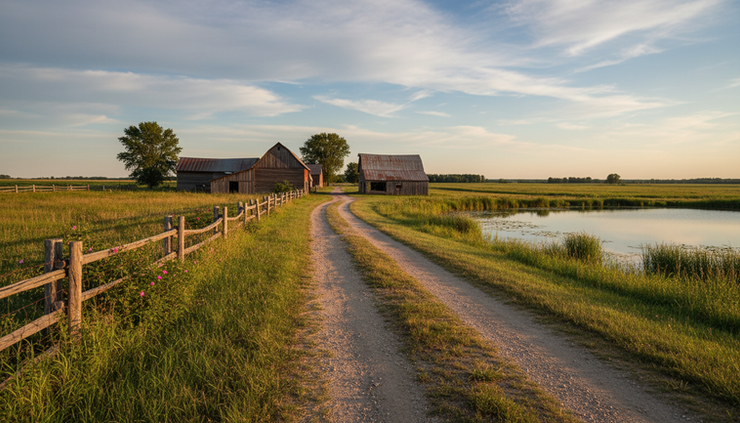
Early farm names worked like rural directions
In the 18th and 19th centuries, many communities did not rely on the kind of address system people use now. Roads might be known by local habit rather than official signs. A lane could be “the road to the mill,” “the creek road,” or “the ridge road.” Landmarks carried weight.
A name like Lakeside Farm did practical work. It told visitors to look for water. Spring Hill Farm pointed to a rise in the land and perhaps a reliable water source. Cedar Grove Farm suggested a stand of cedar trees, a visual clue that could be recognized from a wagon road. Pleasant View Stock Farm told people two things at once: the place had a broad view, and livestock mattered there.
Farm names also helped in commerce. Auctions, breeding notices, seed sales, dairy deliveries, and local newspaper ads often needed a way to identify a place. “At Maple Ridge Farm” was clearer and more memorable than a legal description such as a section, township, and range. The name made the farm easier to find and easier to trust.
These names mattered in everyday life too. A farm might host threshing crews, church picnics, barn raisings, shared labor days, or livestock exchanges. In those settings, the name became part of the social map. People did not just know a property. They knew where it sat in relation to water, woods, slope, wind, and road.
For early settlers, naming also helped turn unfamiliar ground into a known home. A feature like a grove or hill became a reference point. Repeating the name gave shape to a new place. It was a way to make the land legible.
The land offered the first and most honest language
Geographical farm names lasted because they were simple, direct, and true. If a farm sat near a lake, “Lakeside” made sense. If the house stood on a rise with a long view, “Pleasant View” fit. If the soil was bordered by oaks, maples, or walnuts, a tree name felt natural.
Common naming patterns often came from visible features:
Feature | Typical farm names | What the name suggested |
Water | Lakeside, Brookside, Spring Brook, Clear Creek | Water access, beauty, fertility, a known landmark |
Elevation | Hilltop, Spring Hill, Ridgeview, Pleasant View | Good sightlines, open air, pride of place |
Trees | Maple Grove, Oakwood, Cedar Hill, Walnut Grove | Shelter, timber, permanence, local ecology |
Meadows and fields | Fair Meadow, Green Acres, Cloverfield | Pasture, hay, cultivated land |
Stone and soil | Stone Ridge, Red Hill, Limestone Farm | Geology, building materials, soil character |
These words carried practical meaning. A spring could decide where the house and barn stood. A creek could water livestock. A grove could block winter wind. A ridge might drain better than low ground. Good pasture, visible from a road or rail line, could signal a well-kept stock operation.
Names like “Pleasant View” might sound sentimental now, but they often described a real advantage. A high, dry site with a view could be healthier than a damp hollow. It might catch breezes in summer and avoid some flooding in spring. Beauty and usefulness were often linked.
There was also a kind of modest marketing at work. “Pleasant View Stock Farm” sounded calm, stable, and prosperous. The words suggested healthy animals, open pastures, and an owner with confidence in the property. For farms selling horses, cattle, seed, or fruit, a strong name helped create recognition long before modern advertising.
Still, most of these names did not feel forced. They came from daily experience. People named what they saw, used, and valued.

Farm names carried culture as well as geography
Farm names were practical, but they were never only practical. They also reflected the hopes, values, and cultural habits of the people who chose them.
Many early American farms were named in ways that showed attachment to home places. Immigrants and migrants often reused names from earlier communities, family estates, villages, or landscapes they remembered. A farm called Fairview, Bellevue, or Greenfield could echo older naming traditions while describing the new property.
Some names showed aspiration. Words like “pleasant,” “fair,” “happy,” “sunny,” and “prospect” appear often in older farm and estate names. They were not random decorations. They expressed a desire for stability, fruitfulness, and respectability. A farm name could say, quietly, “This is a good place. We intend to stay.”
Religious and moral language also appeared across rural America. Names such as Providence Farm, Hopewell Farm, or Blessing Farm connected land to faith and gratitude. For families who had cleared acreage, endured crop failures, or built a farm over decades, the name could become a statement of survival.
Family names mattered too, but they often paired with geography. A farm might be called Miller’s Spring Farm or Johnson’s Maple Grove. That style linked ownership to a feature that neighbors already recognized. If the family moved on, the feature could outlast the surname.
The name could also mark a shift in purpose. In the late 19th and early 20th centuries, “Stock Farm,” “Dairy Farm,” “Fruit Farm,” and “Poultry Farm” became common additions. They told buyers what the property produced. “Pleasant View Stock Farm” was not just a nice name. It suggested a farm known for animals, perhaps horses, cattle, or breeding stock.
In county histories and old newspaper notices, these names often read like small biographies. They show what people thought was worth announcing: good water, rich pasture, an orchard, a view, a family legacy, a herd, or a promise of plenty.
Some names survive because they still fit
Many old farm names still exist. They appear on road signs, barns, CSA websites, maple syrup labels, restoration projects, and historic registers. Some remain tied to working farms. Others have moved into new uses, such as education centers, wedding venues, conservation lands, and farm museums.
The survival of a name often depends on whether it continues to mean something to the people connected to the place. If the lake is still visible, “Lakeside Farm” remains useful. If the ridge still shapes the fields, “Ridgeview” still feels honest. If generations of a family used the name on milk bottles, fruit crates, auction bills, or barn signs, changing it can feel like losing part of the farm.
A strong example is Shelburne Farms in Vermont. The property was developed in the late 19th century near Lake Champlain and is still widely known by that name today. Its identity has changed over time, from a large agricultural estate to a nonprofit education and working farm, but the name remains attached to the place. The farm’s setting, with broad fields and lake views, still helps explain why the name carries force.
Another familiar case is Monticello, Thomas Jefferson’s Virginia estate. The name comes from Italian and means “little mountain.” While Monticello is best known as a historic home and plantation rather than a typical family farm, its name shows the same pattern: a landform became identity. The hill was not background. It was the defining feature.
Across the country, less famous farms tell the same story. A farm called Maple Grove might keep its name even after most of the original sugar maples are gone because the name is part of family memory. Spring Hill may remain on a mailbox long after a drilled well replaced the spring as the main water source. Clover Hill Dairy may no longer milk cows, but the name can still point to a time when pasture and herd shaped the farm’s daily rhythm.
In many families, the name passes down with stories. Someone remembers the grandparent who painted the first sign. Someone remembers customers asking for peaches from “the orchard on the hill.” Someone remembers a winter storm when neighbors found the farm by following the creek line. These stories give the name weight.
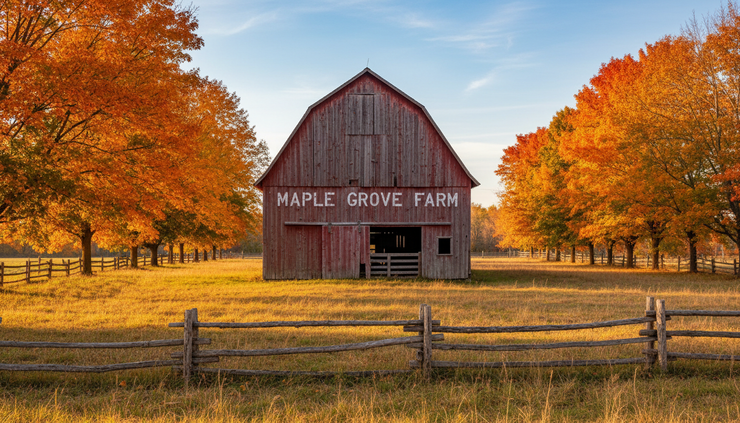
Old names help farms stand apart today
Modern farms operate in a different world. GPS can locate a driveway. Mail carriers use formal addresses. Customers can search online. Yet farm names still matter.
A name gives a farm a story people can remember. It can connect eggs, beef, apples, flowers, wool, or maple syrup to a real place. When a farm sells at a farmers market, through a CSA, or from a roadside stand, the name helps customers remember more than a product. It gives them an image.
That image often comes from the land. “Brookside” feels different from “High Meadow.” “Stone Ridge” feels different from “Sunny Acres.” These names suggest terrain, weather, plants, and history. They help people imagine where food comes from.
Old names also support continuity through change. A farm may shift from dairy to vegetables, from tobacco to hay, from grain to grass-fed livestock, or from private land to a teaching farm. The name can hold the past and present together. It says that the use of the land may change, but the place still has a center.
For historic farms, keeping a name can also protect memory. It can remind visitors that the land had earlier stewards, workers, tenants, or enslaved people whose lives shaped the property. A farm name can invite deeper research into land records, Indigenous history, labor history, and family migration. Some names carry beauty, and some carry difficult history. Both deserve care.
There is also an emotional reason these names last. A farm is not only a production site. It is a place of weather, labor, loss, repair, and routine. People remember where the cows crossed the lane, where the spring flooded, where the apple trees stood, and where the evening light hit the ridge. A land-based name gathers those memories into a few words.
How to read a farm name like a small historical record
An old farm name can answer questions if you slow down and look closely. It will not tell the whole story, but it can point toward useful clues.
When encountering a historic farm name, ask:
What physical feature does the name describe?
Is that feature still visible?
Does the name refer to water, trees, slope, soil, or a view?
Does it include a product, such as dairy, stock, orchard, or poultry?
Does it include a family name, religious word, or ideal such as hope, fair, pleasant, or sunny?
Does the name appear in old deeds, maps, newspapers, signs, or product labels?
This kind of reading can reveal how earlier farmers understood their land. A name like Clear Spring Farm suggests the value of water. Oak Ridge Farm points to trees and elevation. Pleasant View Stock Farm combines beauty with agricultural purpose. Each one works like a short description written by people who knew the ground through daily work.
It can also reveal what later generations chose to preserve. If a farm has kept its name for a century, that choice says something. The name may belong to the family, the local community, or the public memory of the place. It may be used because it is useful, but also because it feels right.

The land still speaks through the name
Early farm names were born from a close reading of place. Farmers chose names that helped neighbors navigate, buyers remember, and families claim a sense of home. Lakes, springs, groves, hills, ridges, meadows, and views became words on signs and maps because they shaped daily life.
Many of those names still survive because they do more than identify property. They carry memory. They preserve local geography. They show how a farm wanted to be known. Even when ownership changes or agriculture shifts, a land-based name can keep the farm connected to the feature that first made it distinct.
The next time an old farm sign appears along a rural road, the name may be worth a second look. It might point to a spring behind the barn, a vanished orchard, a ridge with a view, or a family’s long effort to make a place known and loved.


Comments